Open daily: 9:00 AM – 6:00 PM
Box office open: 9:00 AM – 5:00 PM
Box office open: 9:00 AM – 5:00 PM



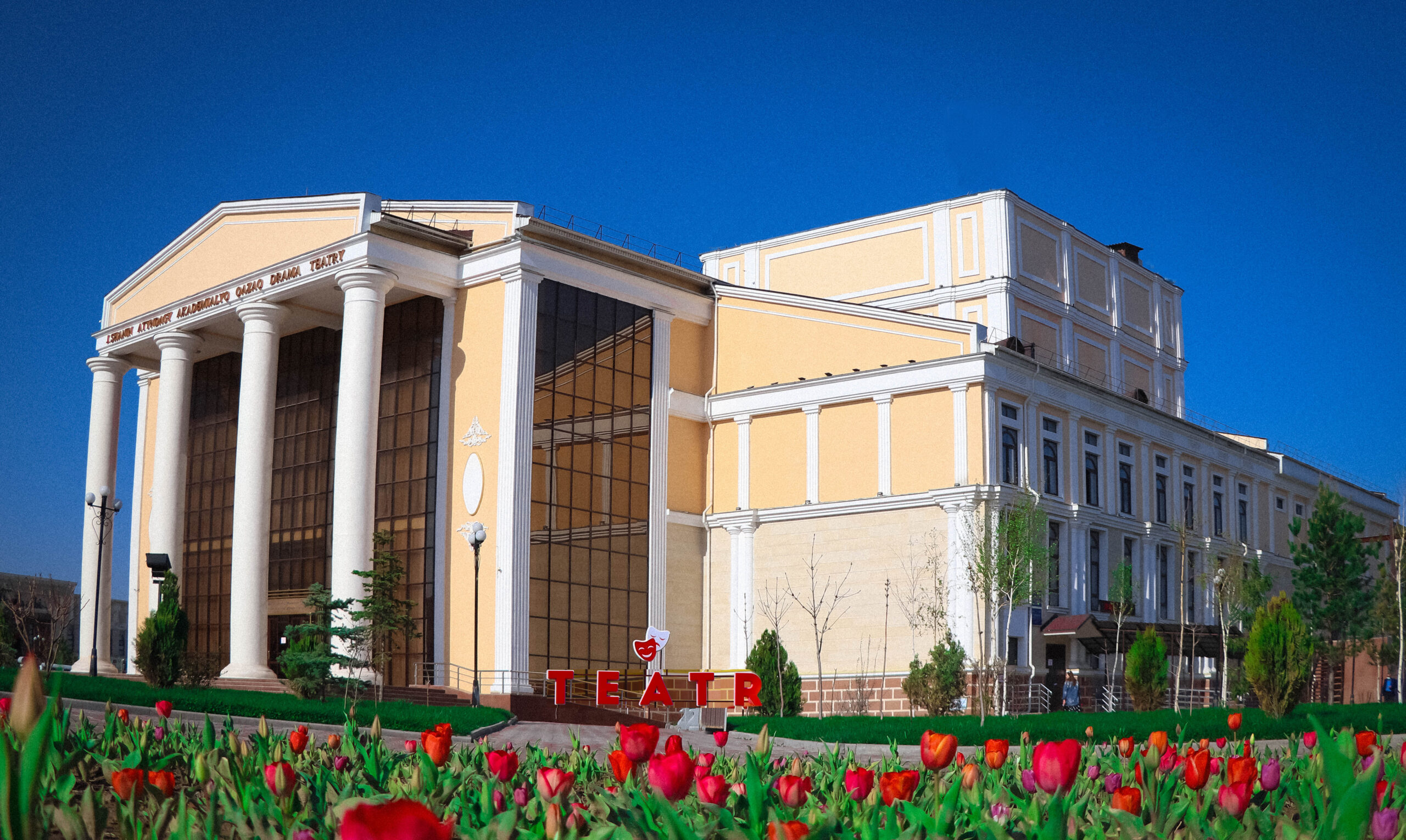
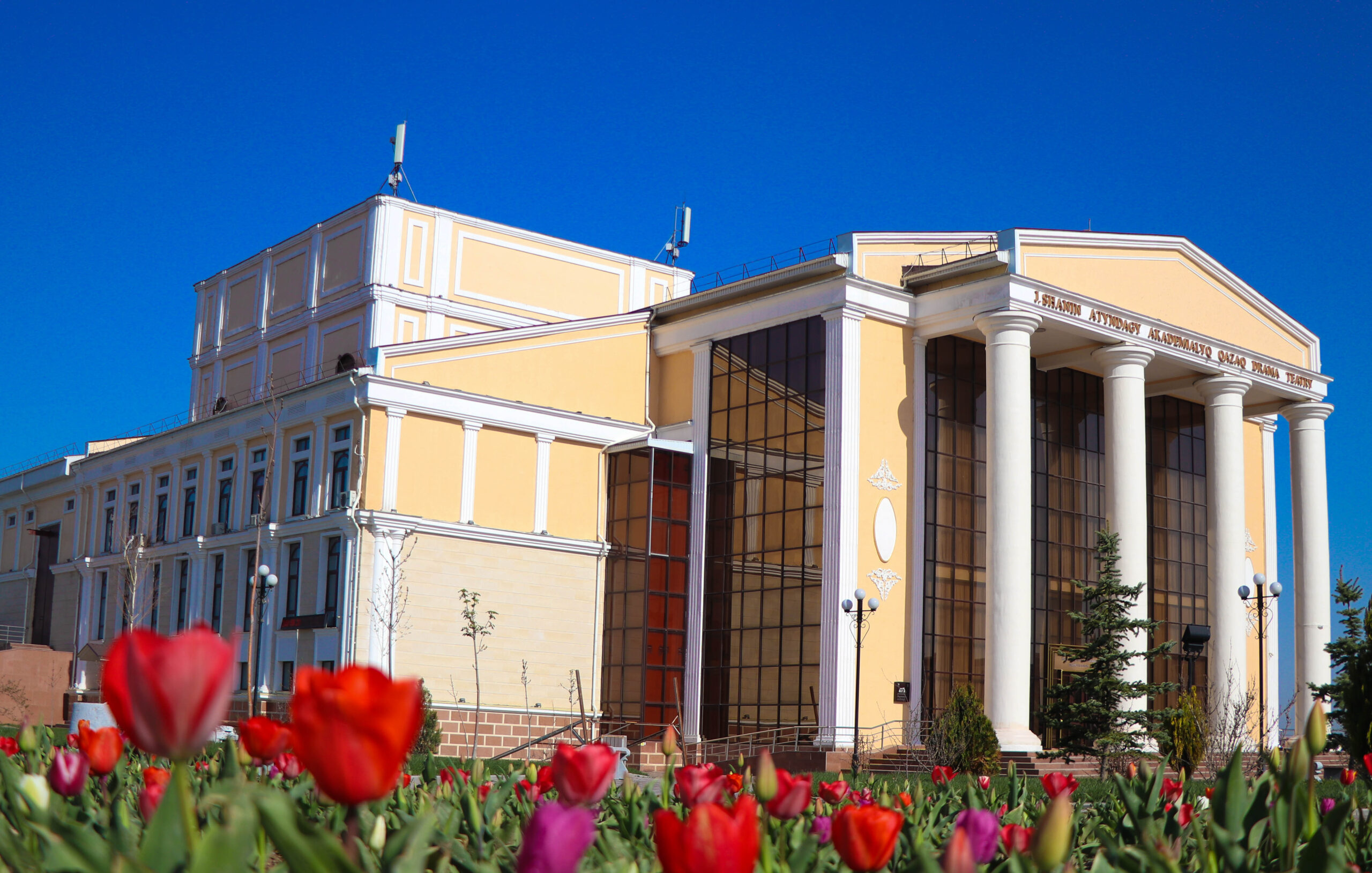
The History of the Shymkent City Academic Kazakh Drama Theatre
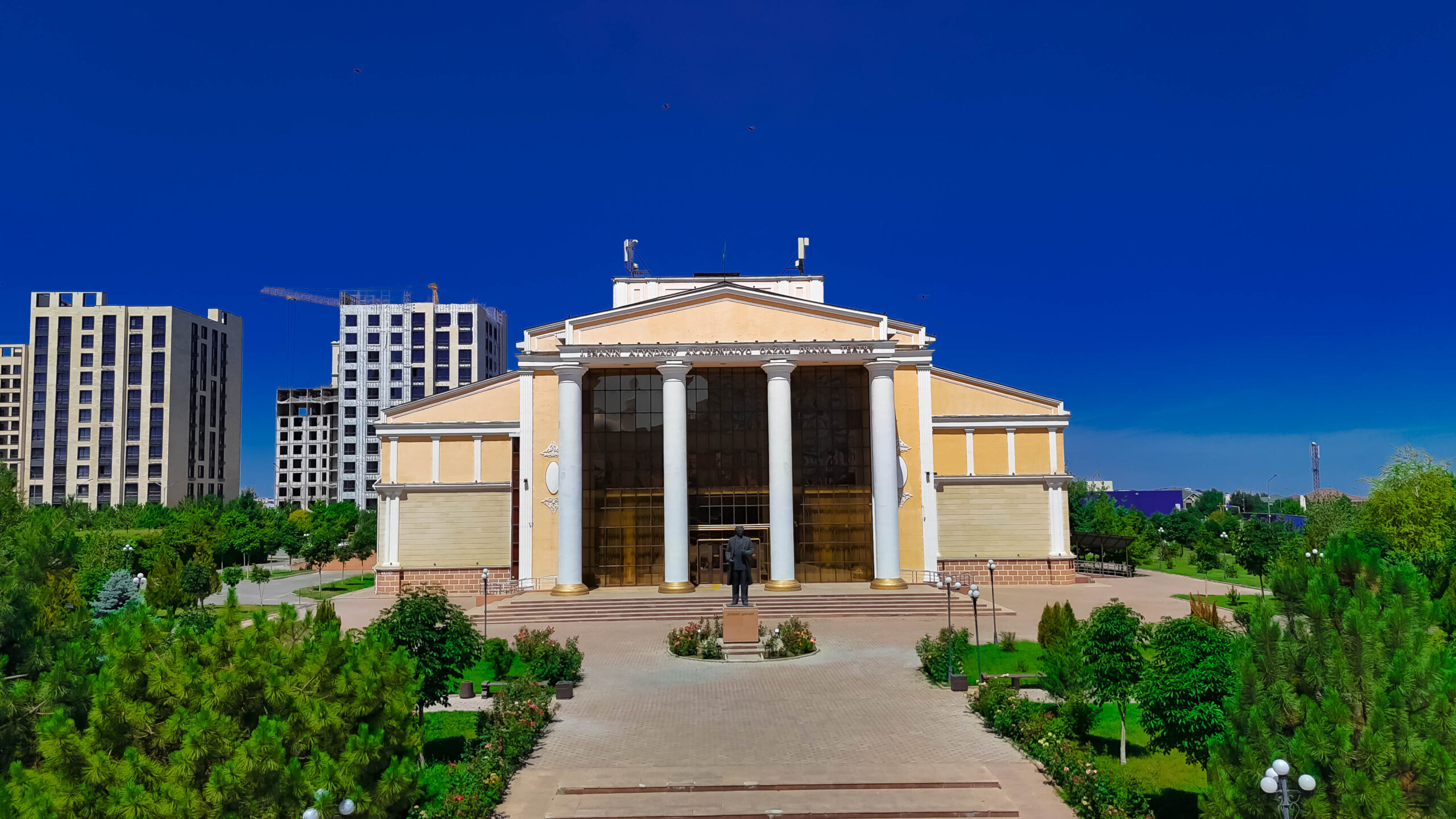
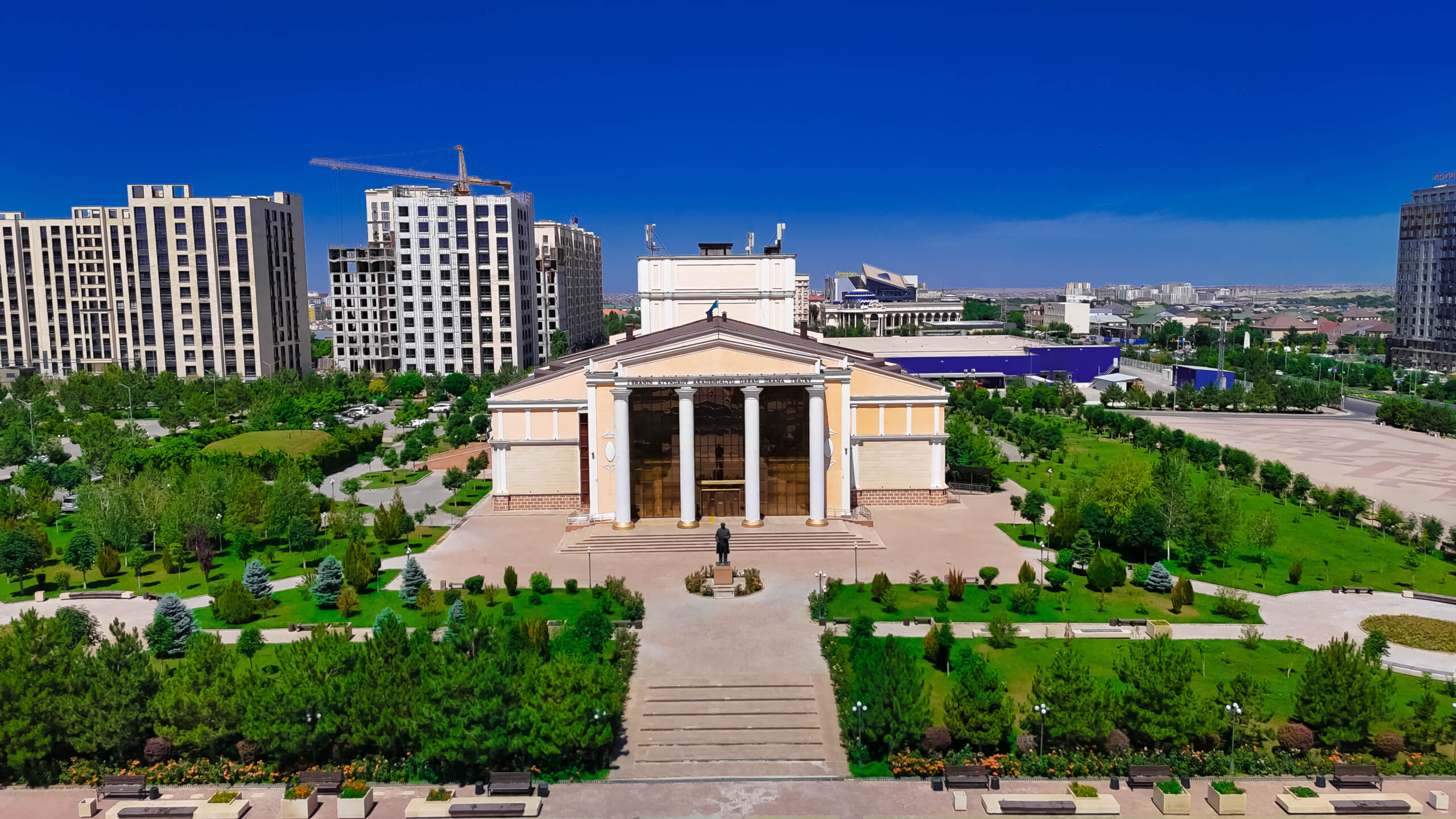
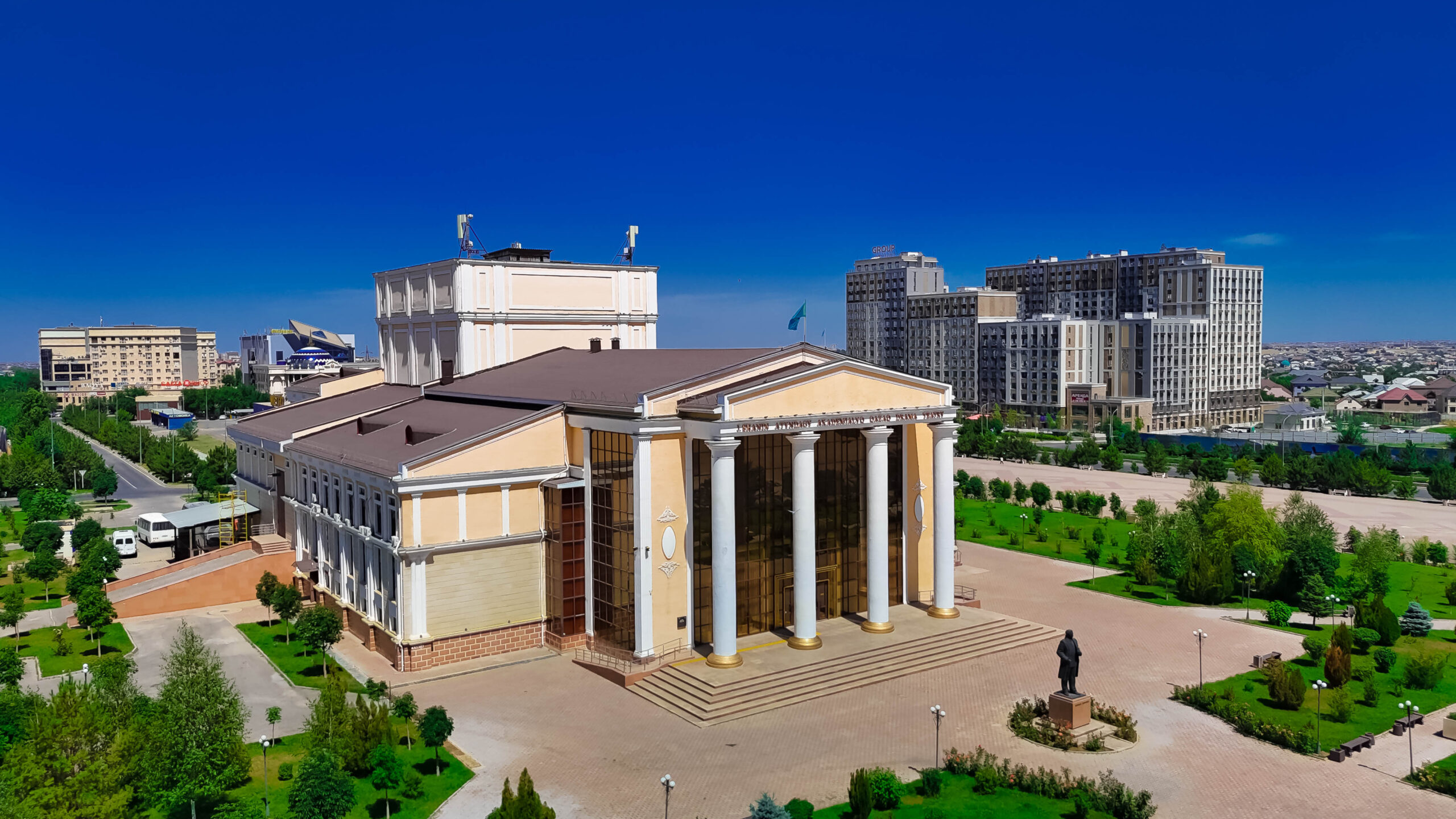
The Shymkent City Academic Kazakh Drama Theatre is the cradle of professional theatre art in the southern region of our country and one of the foundational centres of our national culture. With a history spanning almost a century, this artistic company has made an immeasurable contribution to the formation and development of Kazakh theatre art.
Shymkent, regarded as Kazakhstan’s third-largest metropolis, is one of the country’s ancient cities, with a deep history and a rich cultural heritage. It was therefore only natural that theatre art took shape early in this region. The origins of the theatre — which today holds a distinctive place in the country’s cultural landscape — date back to the 1920s.
From 1926 to 1929, the prominent writer, playwright and educator Zhusipbek Aimauytov served as director and teacher of the pedagogical college in Shymkent. On his initiative, theatre clubs were organised among young students, and various productions began to be staged. The 1926–1927 records of the Syrdarya Pedagogical College note the regular activity of drama, music, political and regional editorial boards, as well as amateur art clubs.
The organisational and creative work of Zhusipbek Aimauytov, one of the founders of Kazakh dramaturgy, greatly contributed to laying the foundations of professional Kazakh theatre in the Shymkent region. Together with his students he formed a theatre club and presented productions to audiences. In this way, the first step of Kazakh theatre art in the south was taken.
In 1927, the theatre figure Zhumat Shanin, reflecting on the state of the theatres, gave high praise: “There is no one more worthy of being a director than Zhusipbek Aimauytov.”
In 1929, the public education department of the Syrdarya District, seeking to strengthen cultural and educational work, decided to direct the activities of educational institutions and cultural organisations towards rural areas. This initiative helped theatre art spread widely among the population.
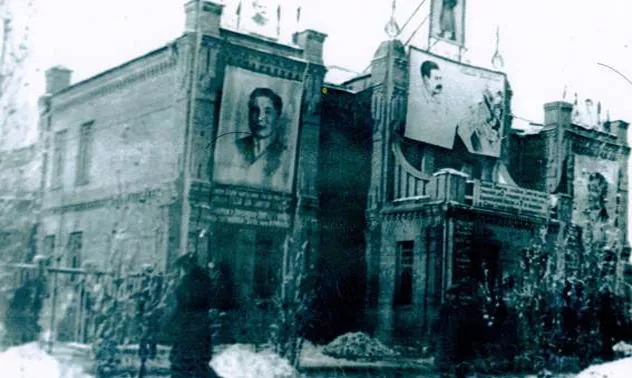
On 3 October 1929, the newspaper Sovetskaya Step (Soviet Steppe) reported that a permanent theatre troupe had been established in Shymkent and that the winter theatre season would open. The publication noted that repair work was under way on the theatre building and that a new repertoire was being prepared.
Thus, from October–November 1929, the Kazakh Drama Theatre in Shymkent began serving audiences on a permanent basis. The theatre operated in the building that today houses the Puppet and Youth Theatre, located on present-day Kazybek Bi Street.

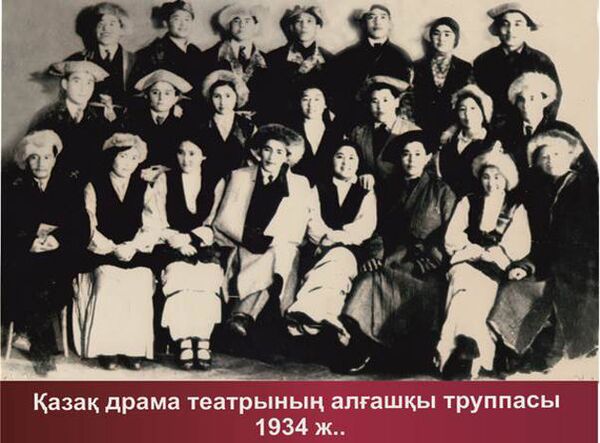
The company’s first ensemble included Eleusiz Dosymbetov, Taken Madikozhayev, Gulzhamal Batyrgaliyeva, Ramish Abdrakhmanov, Zhanibek Argynbayev, Parukh Zhasenov, Isabek Taurbalin, Koregen Kamalov, Auezkhan Myrzaliyev, Elaman Mukhametkarimov, Kudaibergen Azimbayev and other performers.
On 16 February 1934, the United Kazakh and Uzbek Theatres were organised in the South Kazakhstan Region, giving new impetus to the professional development of theatre art. On 7 April of that year, Guzeiir Zhasakbayev’s play “The Law of the Age” (Zamana zany) was staged; the play had previously been produced in Almaty under the direction of Zhumat Shanin.
On 10 September 1938, Friedrich Schiller’s play “Intrigue and Love” (Kabale und Liebe) was staged as the graduation work of the alumni of the Kazakh studio of the Leningrad College of Stage Art. With this production, the Shymkent theatre entered a new creative stage at a professional level. A new era began in the theatre’s history, and the company set out on the path to becoming one of the leading theatres in the republic.
The years of the Great Patriotic War placed a heavy burden on the theatre company. In the early period of the war, 26 members of the theatre went to the front, 17 of them actors. Among those who went to the front were the theatre’s talented artists K. Karsakbayev, R. Baikenov, M. Yusupov, K. Syzdykov, T. Madikozhayev, M. Kokeyev, I. Akbuiymov, A. Sheikhslamov, S. Shazhenov and other masters of the art. Sadly, most of them never returned to their homeland.
During the war years, the company did not halt its creative work and helped raise the spirits of the people on the home front. From 1942, Gainizhamal Khairullina served as the theatre’s chief director. Under her leadership, the company consistently exceeded its production targets and was able to forgo state subsidies. The theatre’s staff contributed 100,000 roubles to the defence fund in 1942 and 55,000 roubles in 1943, adding their share to the common cause on the road to Victory.
The All-Kazakhstan Theatre Spring held in 1957–1958 gave particular impetus to the creative development of regional theatres. During this period, the theatre made a successful tour of Almaty and was named a “Laureate of the All-Kazakhstan Theatre Spring” for Sabit Mukanov’s play “Shokan Ualikhanov”.
The company’s creative achievements were highly acclaimed, and it was awarded the Certificate of Honour of the Supreme Soviet of the Kazakh SSR. The actress A. Abdullina received the title “People’s Artist of the Kazakh SSR”, while director Abubakir Ordabayev and actors Akish Shanin and Sagidolla Yergaliyev were awarded the honorary title “Honored Artist of the Kazakh SSR”.
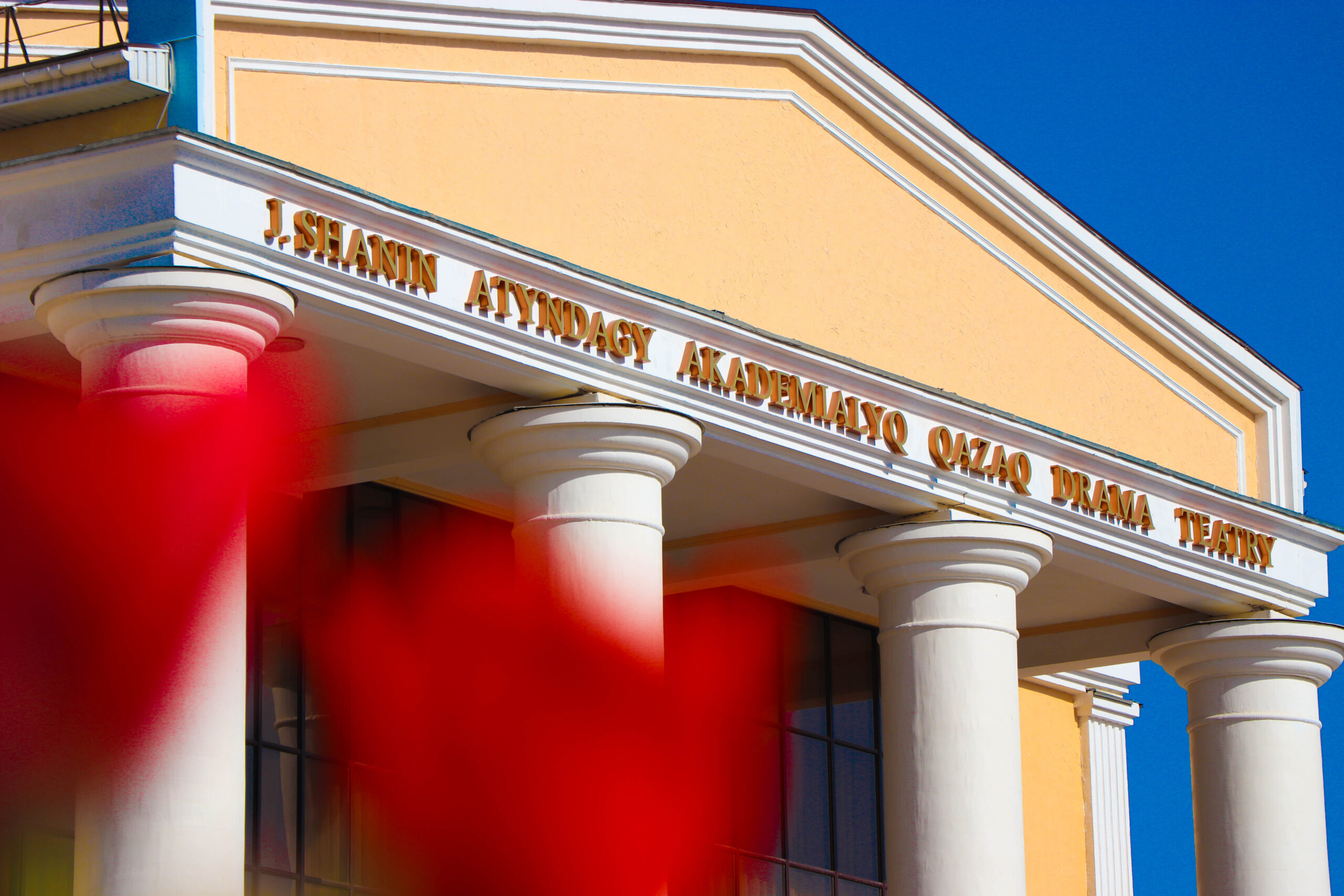
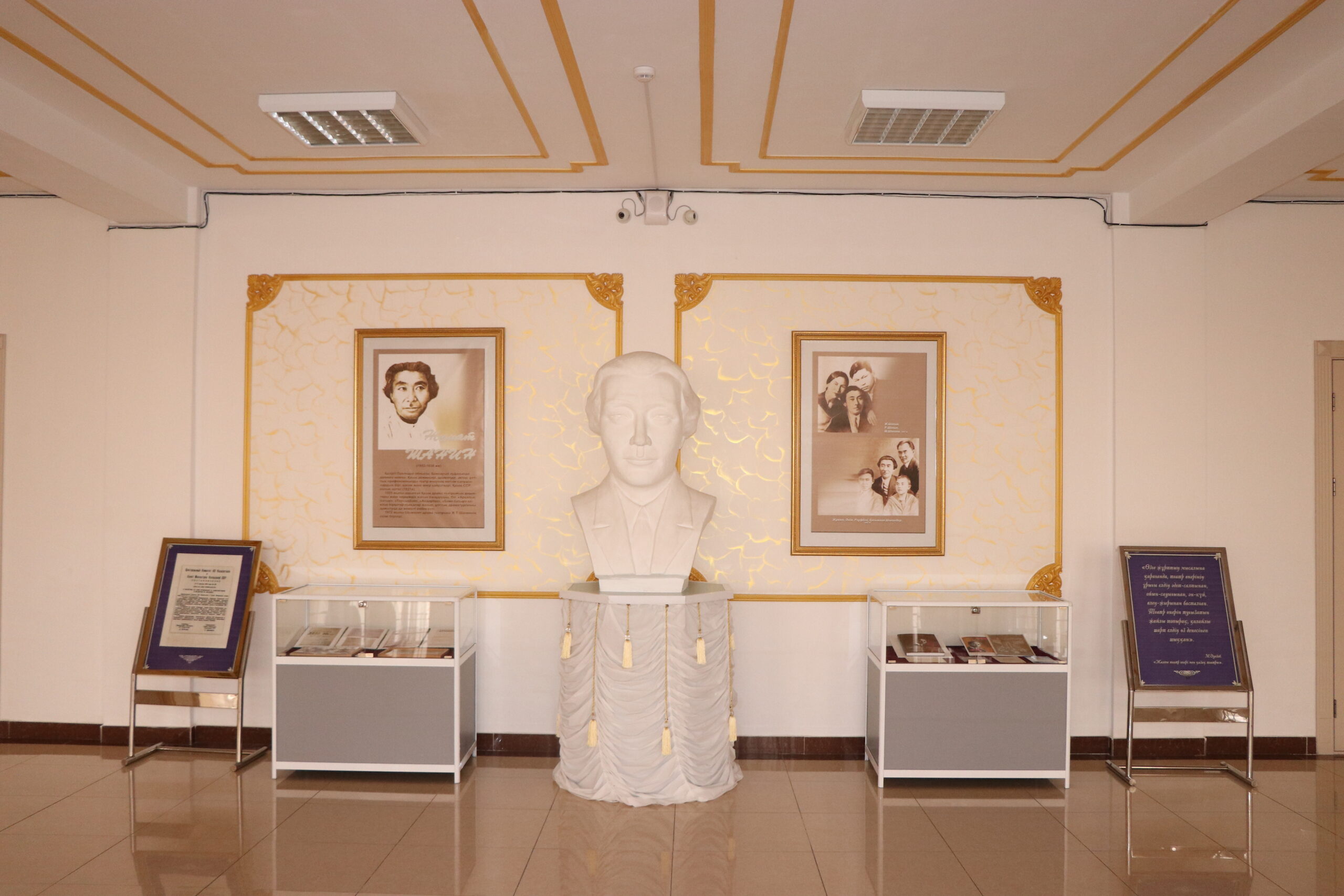
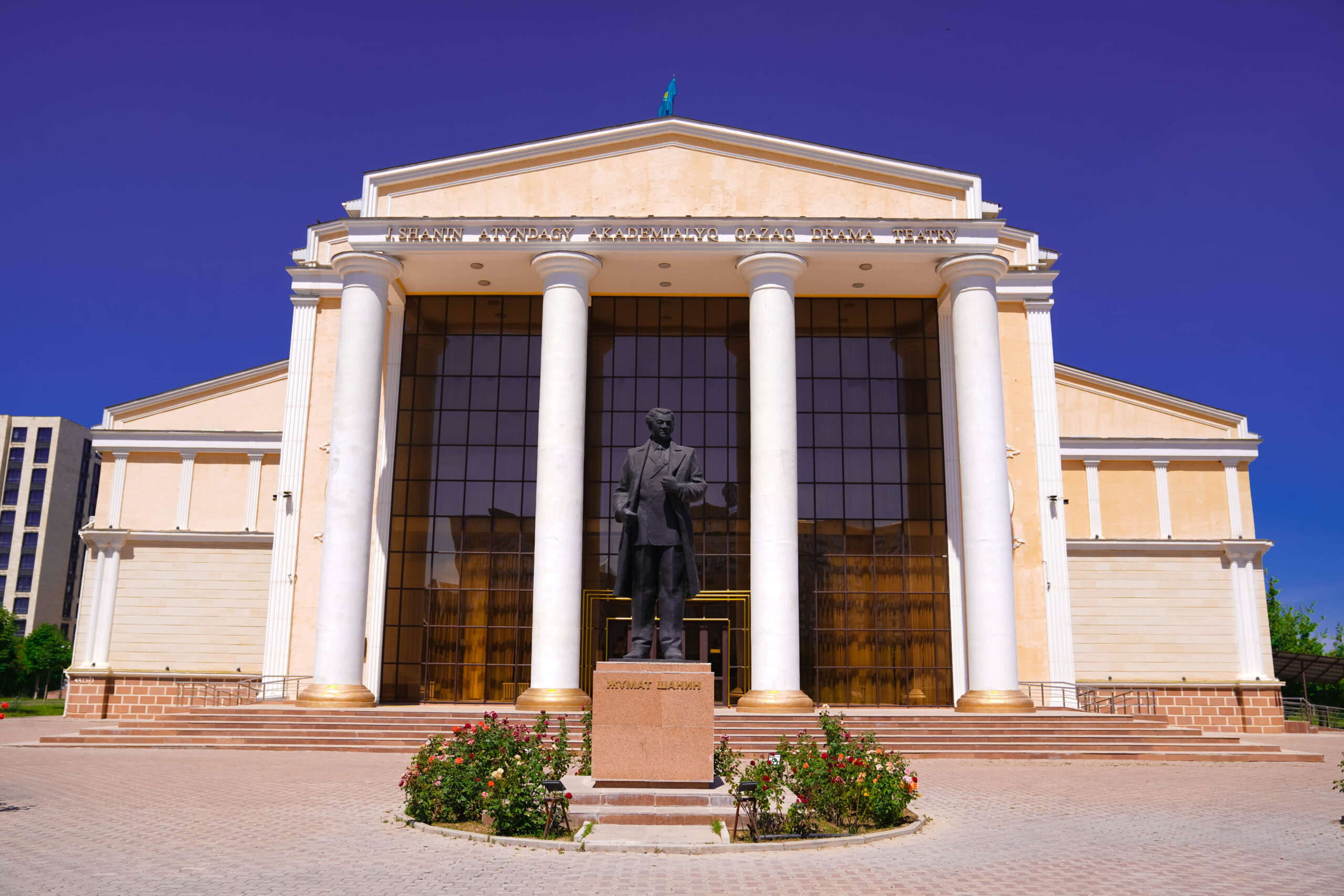
In 1972, the theatre was named after Zhumat Shanin, one of the founders of Kazakh theatre art. This historic decision increased the company’s creative responsibility and spurred it towards new achievements. In the following years, the theatre performed successfully at national festivals and received numerous awards.
From 1980, People’s Artist of Kazakhstan Zhakyp Omarov was appointed the theatre’s chief director. Under his creative leadership, the theatre rose to a new level. During this period, the productions “Akan Seri – Aktokty” by Gabit Musirepov, “Madi” by Abdilda Abishev, “Ulan Asu” by Kalizhan Bekkhozhin, and “Kos Anar” and “Apke” (The Elder Sister) by Saken Zhunisov were staged and won high acclaim from Almaty audiences.
Presented on the eve of the theatre’s half-century anniversary, these productions demonstrated the company’s high professional level. For these achievements, the company was once again awarded the Certificate of Honour of the Supreme Soviet of the Kazakh SSR.
From the early 1980s, chief designer Kaltore Zhumagulov made an outstanding contribution to the artistic design of productions. His creative explorations and professional mastery helped raise the artistic level of the theatre’s productions.
In 1990, at the company’s invitation, Asker Kuldanov returned to the post of chief director. During this period, the theatre’s creative potential grew further and new productions came to life. Members of the company such as Farida Ainakulova, Akkuliyeva, Aiman Zhumabekova, Salima Zainullina, Kupiya Rakhymberdiyeva, Abdirash Abishev, Orazaly Tastanbekov, Roza Salova, Tolegen Yesengaliyev, Sabit Sytynshev, Galiya Khasangaliyeva, Askar Oserbayev, Zhumabek Dosayev and Kairat Magauinov honed their artistic mastery and made a significant contribution to the development of theatre art.
In 1993, the awarding of the title “Honored Artist of Kazakhstan” to the theatre’s talented actress Kupiya Rakhymberdiyeva and “People’s Artist of Kazakhstan” to Aksakal Kalmyrzayev was a clear reflection of the company’s creative achievements.
Despite economic difficulties, the company did not slacken its creative pace and continued to offer audiences high-quality works. The theatre’s director at the time, Akhmet Otebayev, worked tirelessly to keep the company operating steadily.
In 1994, the theatre celebrated its 60th anniversary in Almaty. As part of the celebrations, audiences were presented with “Arkalyk Batyr” by Zhumat Shanin, “The Girl Who Longed for Her Mother” (Anasyn ansagan kyz) by Dulat Isabekov, “The Most Beautiful Bride” (Eng ademi kelinshek) by Serik Balgabayev, and “Aisha Bibi” by Bolat Abildayev.
During these years, productions such as “The Restaurant” (Restoran) by Yskak Sarbayev, “The Holy Karlygash – Tole Bi” by Markhabat Baigutov and Sherkhan Orynbayev, “Two Meetings in an Old House” (Eski uidegi eki kezdesu) and “The Girl Who Longed for Her Mother” by Dulat Isabekov, and “The Last Song of Mukagali Makatayev” by Orazbek Bodykov, among many others, were staged and won high praise from theatre critics and audiences.
After Kazakhstan gained independence, the company raised its creative endeavours to a new level and began performing successfully at international and national festivals. While preserving the national character of theatre art and mastering contemporary stage trends, the company achieved outstanding results at many prestigious cultural events.
In the 2000s, the theatre took part in the festival of Turkic-speaking peoples’ theatres held in Istanbul, Turkey, as well as in the international festivals of the theatres of the peoples of Central Asia and Kazakhstan organised in Tashkent and Andijan, Uzbekistan, introducing the distinctive character and artistic level of Kazakh theatre art to international audiences.
At the national theatre festival held in Petropavl in 2002, the company performed Gabit Musirepov’s tragedy “Kozy Korpesh – Bayan Sulu”. At the 11th National Theatre Festival held in Oral in 2003, the tragedy “Is There a Poison I Have Not Drunk?” (Men ishpegen u bar ma?) by Iran-Gaiyp was staged, and the theatre won the “Best Director” nomination.
In 2005, the theatre participated in the “Art-ORDO” international theatre festival held in Bishkek, the capital of the Kyrgyz Republic, with Chingiz Aitmatov’s tragedy “Zhanpida” and won the festival’s Grand Prix. It was also named the winner in the “Best Director” and “Best Designer” categories. This achievement was one of the important milestones in the theatre’s history.
At the “Sakhna – Theatre Spring 2006” festival and the International “Theatre Spring” festival in 2007, the company won the Grand Prix, once again proving its high professional level.
In 2009, at the national theatre festival in Karaganda dedicated to the 175th anniversary of Birzhan Sal Kozhagululy, the theatre took part with Dulat Isabekov’s drama “Mundyk – Zarlyk” and received a special nomination “For the Successful Staging of an Epic Work”.
At the “Theatre Spring 2011” national festival dedicated to the 20th anniversary of Kazakhstan’s independence, Erkin Turysov’s historical drama “The Great Migration” (Uly Kosh) won high acclaim from audiences and the jury and took the Grand Prix in the “Best Thematic Production” nomination.
At the international “World of Isabekov” art festival in 2012, Dulat Isabekov’s comedy “What Do We Do Now?” (Endi kaittik?) was staged with success. The production’s director, Ye. Orazymbetov, was awarded the “Best Directorial Solution” title, while actress Nurzhamal Kalambayeva became the winner in the “Best Supporting Actress” nomination.
Success in theatre art was the result of the joint efforts not only of directors and actors, but also of designers, composers, musicians and all the creative staff working behind the scenes.
In February 2015, the theatre was granted “Academic” status and was reorganised as the Regional Academic Kazakh Drama Theatre named after Zhumat Shanin. This status was a high recognition of the company’s many years of creative work.
Today the theatre is a major cultural centre with established professional mastery and creative traditions, bringing together experienced and younger generations of performers. The theatre’s senior artists teach young people the intricacies of stage culture and acting skill and share their professional experience. In this way, the tradition of continuity within the company carries on uninterrupted.
In May 2025, the company took part in the international theatre festival held in Trabzon, Turkey, with Chingiz Aitmatov’s “The White Ship” (Ak Keme) and won high acclaim from audiences and the jury.
In May 2025, the company took part in the international theatre festival held in Trabzon, Turkey, with Chingiz Aitmatov’s “The White Ship” (Ak Keme) and won high acclaim from audiences and the jury.
In September of that year, the company took part in the 3rd “BIKEN FEST” International Theatre Festival held in Taldykorgan for the 50th anniversary of the Biken Rimova Drama Theatre, presenting Aigiz Baimukhametov’s play “Don’t Abandon Me, Mother!” (Tastamashy, ana!) and winning the “Best Musical Design” nomination.
The theatre also took part in the 2nd National Young Directors’ Theatre Festival held in Almaty and received a special Letter of Appreciation from the festival’s director, Tolegen Yesenaliyev.
From 27 September to 5 October 2025, the company organised a tour of several cities in Kazakhstan. Audiences in Semey, Pavlodar, Bayanaul, Ekibastuz and Astana enjoyed the theatre’s finest productions. This tour was full of creative success — memorable and productive for the company.
After the tour, the theatre ceremonially opened its 97th season and stepped towards new creative heights. Today the company works successfully to develop national theatre art and continues to offer audiences high-quality productions. This nearly century-old temple of art serves the development of Kazakh culture, and there is no doubt that it will go on to achieve new creative successes in the future.