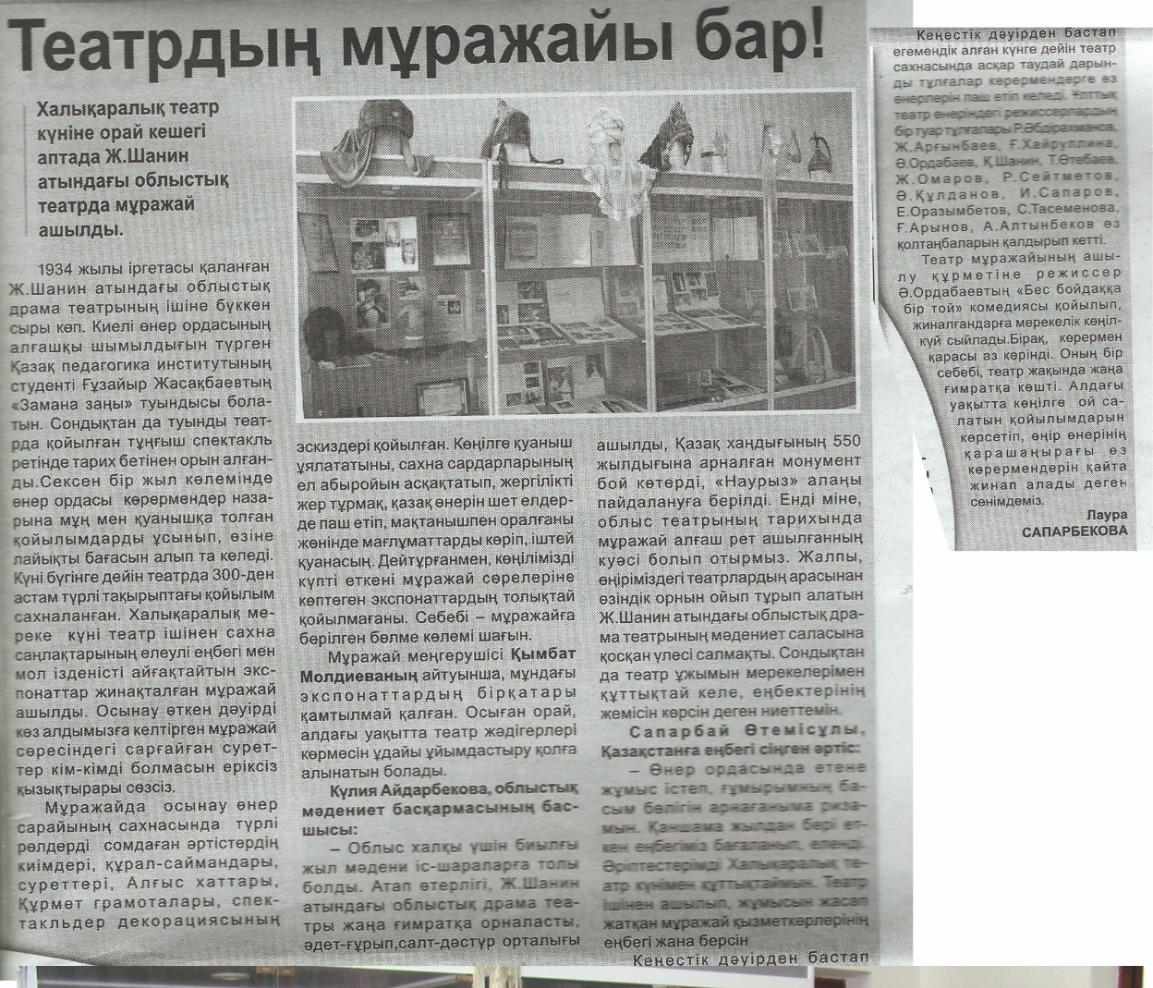
The idea of opening a theatre museum had long been cherished, and from 2012, on the initiative of the theatre’s then director B. Pirimbetov, preparations for its opening began.
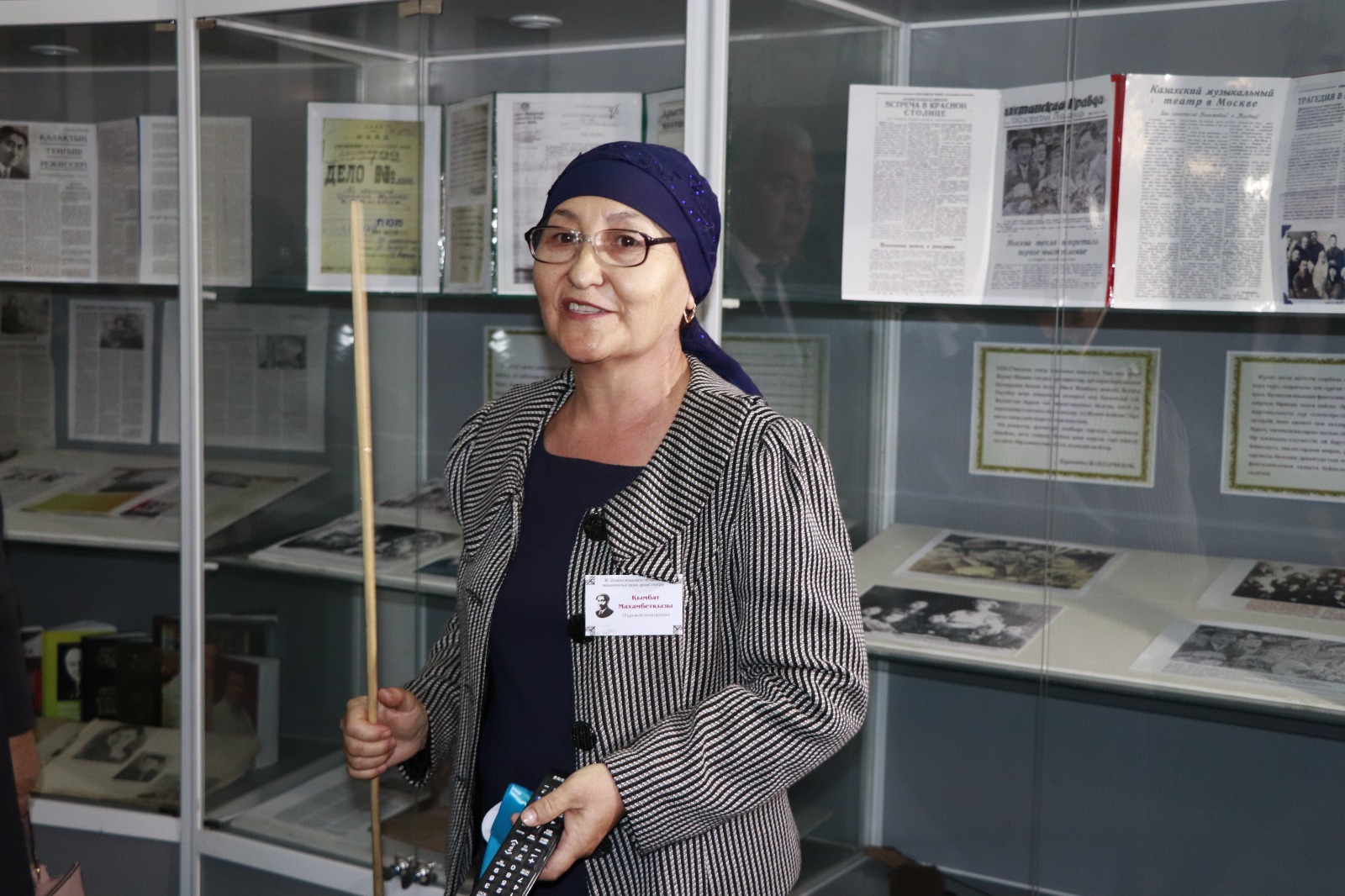
Museum work has its own particular character compared with other kinds of work; it calls for thorough research. The theatre has operated continuously since 1929, and its productions, various events and numerous photographs were carefully studied and their dates established. Sorting them by production and identifying who appears in each photograph and which production it belonged to was a task on which Mazhit Zhambyluly Iliaskarov (Honoured Worker of the Republic of Kazakhstan) and Moldiyeva Kymbat Makhambetkyzy did an enormous amount of work.
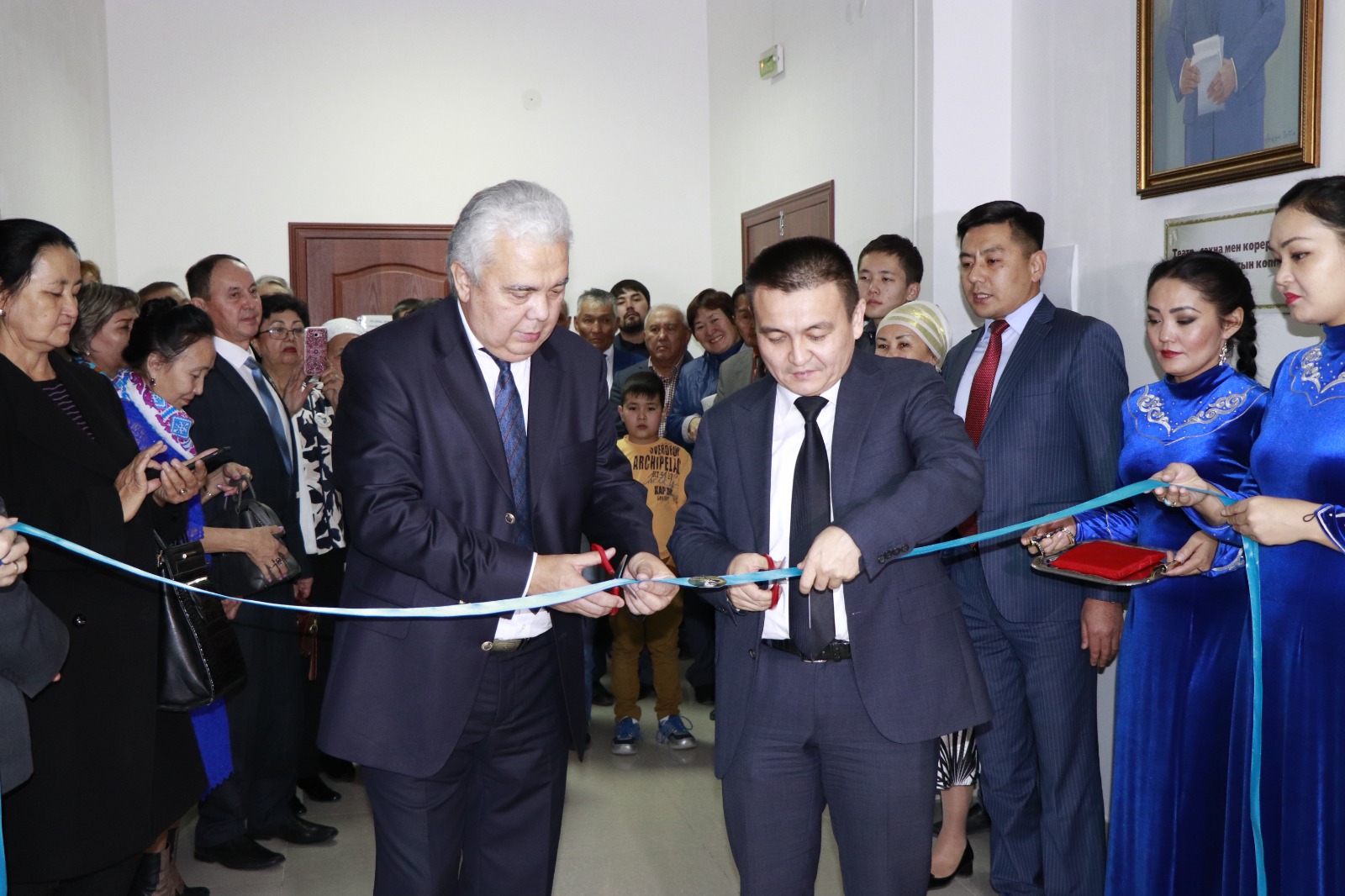
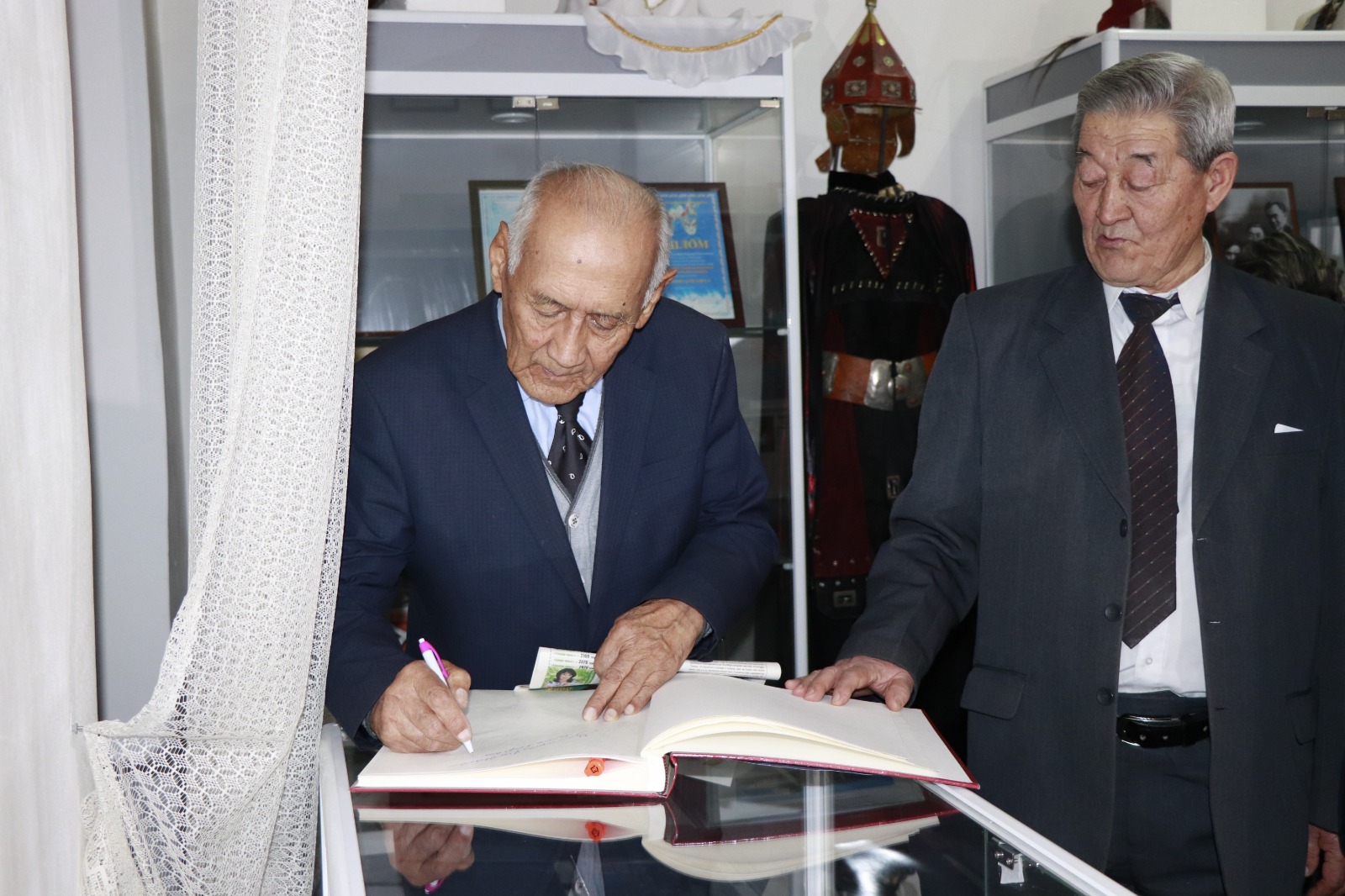
In 2015, on the eve of Theatre Day and alongside the “Theatre Spring 2015” festival, the museum opened at our theatre. To convey the theatre’s history, the museum displays photographs from its productions, the costumes and personal belongings of famous figures, and — to show how much labour goes into every production before it reaches the audience — props, models and various headpieces from the make-up and prop workshops and from the work of the set designers. All of this brought great pleasure to the visiting public and audiences.
The theatre museum’s collection holds photographs of productions, individual artists and various events dating from the 1930s onward, as well as programmes, playbills, newspaper clippings of articles written about our theatre, certificates, letters of appreciation, artists’ manuscripts and information about them, archival documents, and, from more recent years, discs with recordings of productions.
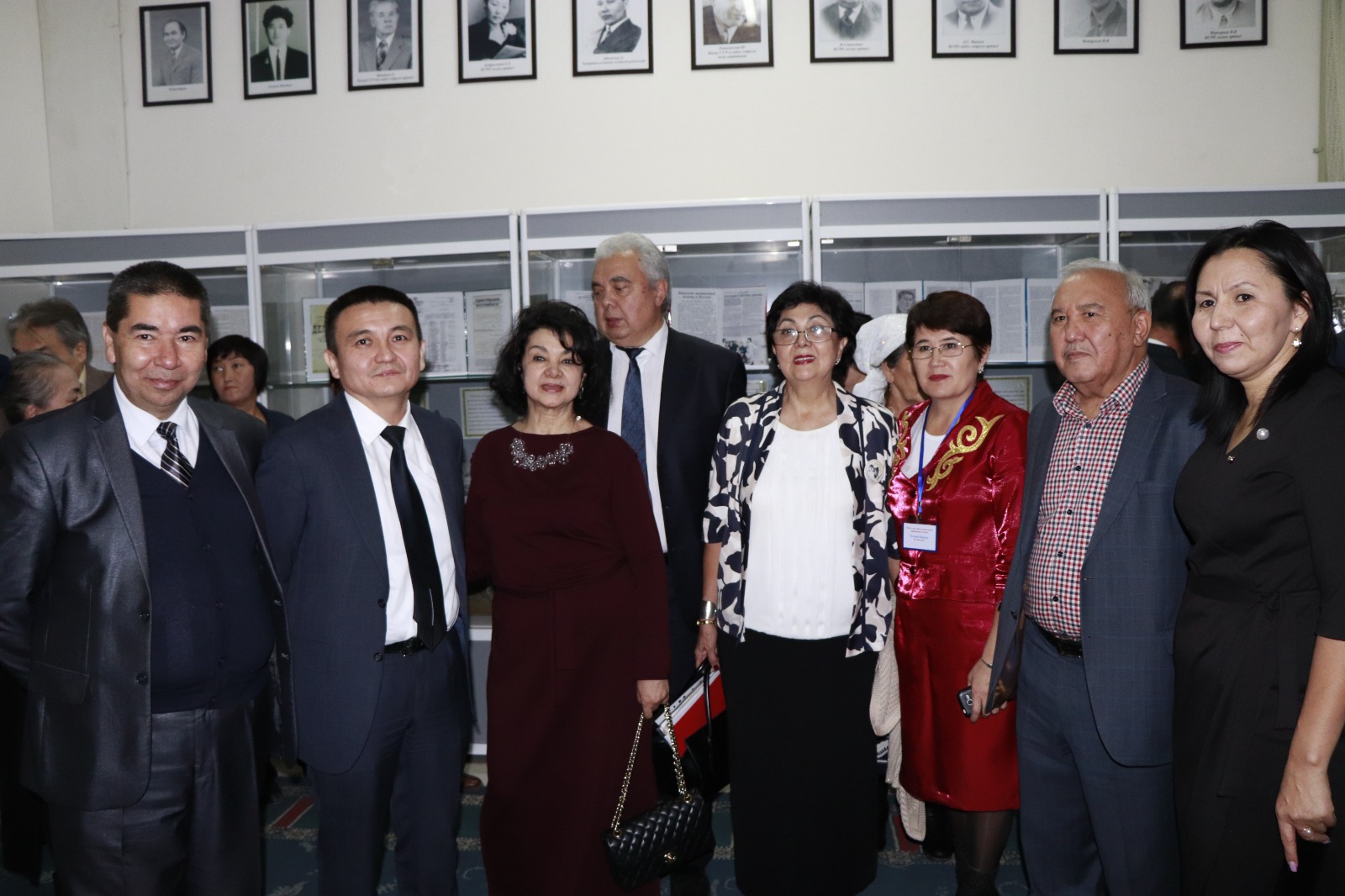
In 2017, during the celebration of the 125th anniversary of Zh. Shanin, guests from across the country and Shanin’s relatives were invited. Through the efforts of Bolat Shanin, a direct descendant of Zh. Shanin, all documents relating to Zhumat Shanin were gathered together and a special Shanin corner was opened. It featured the productions Shanin had staged, family photographs, documents from the time of his repression and of his subsequent rehabilitation, photographs of his descendants, and words spoken about Zh. Shanin by members of the cultural community.
Several booklets and magazines have been published about the productions staged at the Shanin Theatre and the artists who have worked there. These works help readers and young theatre scholars gain a wealth of information about the theatre and carry out further research.
At present, digital copies of almost all the preserved artefacts have been completed. From now on, these valuable artefacts must be handled with care and given the utmost preservation, while information relating to the theatre’s history should continue to be gathered and added to year after year.